


With the art and words of Islay Arboleda, Editor
The Man Behind the Glasses
At 64, Tom Ford remains the benchmark of masculine perfection. Always impeccable, in his iconic dark-rimmed glasses and a black suit that seems like an extension of his own skin. Yet, behind that image of absolute control lies a story of constant reinvention: that of an architecture student who ended up rescuing fashion empires and conquering Hollywood with sheer willpower.

From Texas to the Runways
Born in Austin, Texas, Ford did not begin his career measuring fabrics. He moved to New York City to study Interior Architecture at the prestigious Parsons School of Design. This education was fundamental: it granted him a three-dimensional and structural vision that he would later apply with mastery, both in the cut of a garment and in every cinematic frame. For Ford, a dress or a building are governed by the same laws of proportion and beauty.


His History with Gucci
The most decisive chapter of his career began in the 90s when he accepted the challenge of traveling to Italy to take the reins of a Gucci that was on the verge of bankruptcy. There, Ford performed a commercial and creative miracle: he not only designed clothing but also invented an aspirational lifestyle, charged with a sophisticated sensuality that restored the brand’s lost glory. Under his leadership, Gucci went from being a company in crisis to becoming a multi-million dollar giant, defining the aesthetic of an entire decade.

The Erotic Renaissance: The Era of Provocative Sensuality
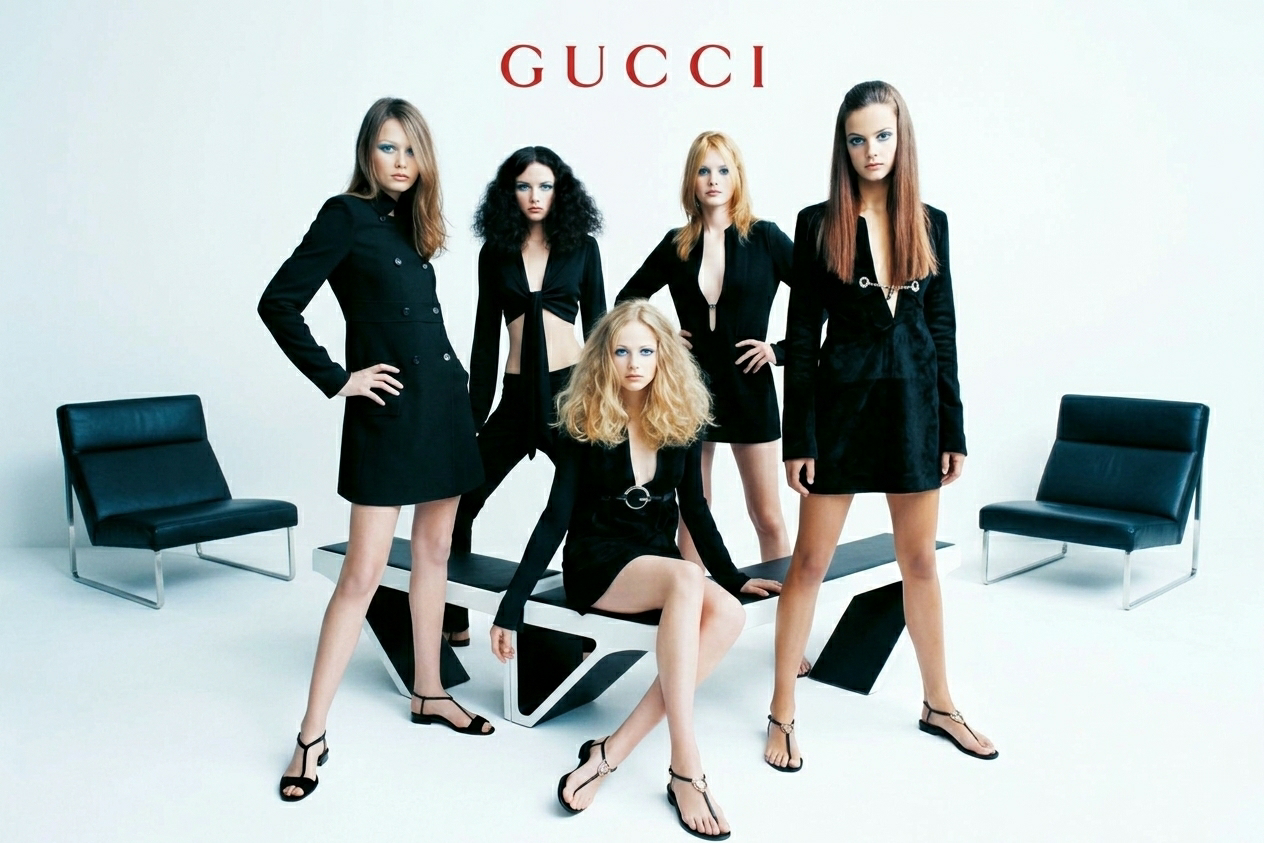
The true turning point for Gucci was not only woven on the runways but was also immortalized on the glossy pages of fashion magazines. Tom Ford understood that to revive an Italian house on the verge of bankruptcy, changing designs was not enough; he had to sell an aspirational, raw, and magnetic desire. To achieve this, Ford teamed up with the visionary stylist Carine Roitfeld and the legendary French photographer Mario Testino (along with iconic campaigns also shot by Terry Richardson).

Together, they inaugurated the era of provocative sensuality: a visual strategy with advertising campaigns of bold eroticism, characterized by cinematic and high-contrast lighting, sculpted bodies, and poses with a magnetism so defiant that they bordered on scandal.
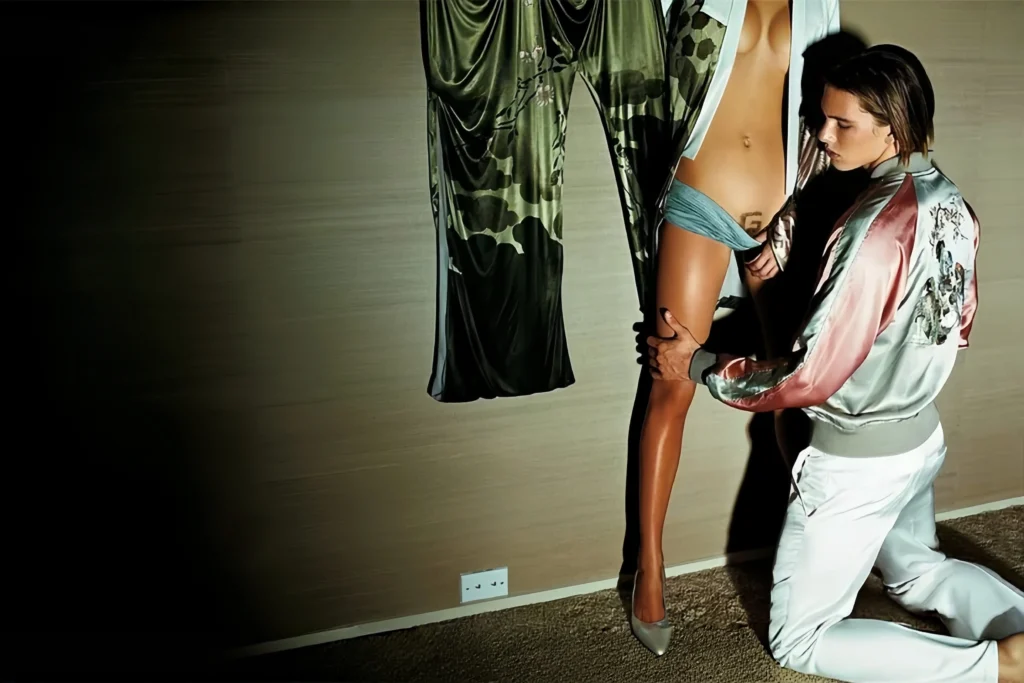
Iconic images, such as the famous double «G» logo shaved into a model’s pubic hair, generated an unprecedented media stir. This art and photography direction, loaded with dangerous and highly sexy sophistication, transformed the prevailing minimalism of the nineties into a synonym for hedonistic power.
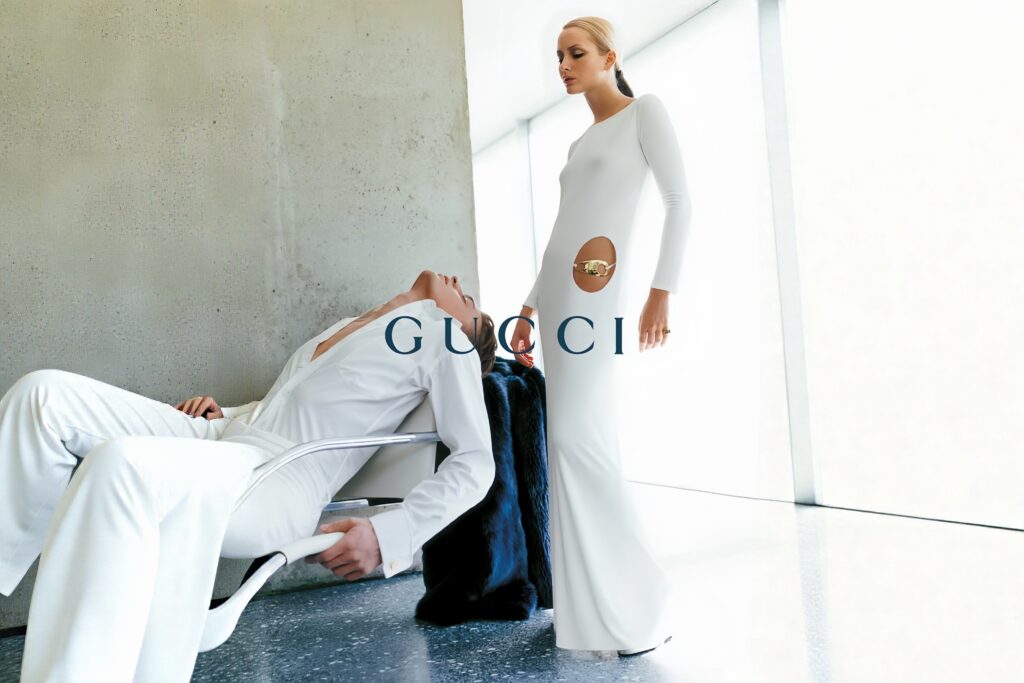
Gucci was no longer just selling handbags or loafers; it was selling the status of being the most attractive person in the room, catapulting the firm’s revenue by more than 90% and consolidating Ford as the undisputed king of elegant provocation.
The DNA of Style: The Tom Ford Woman and Man
«Ford’s fashion is not for the timid; it is for those who understand that dressing is an act of power.«
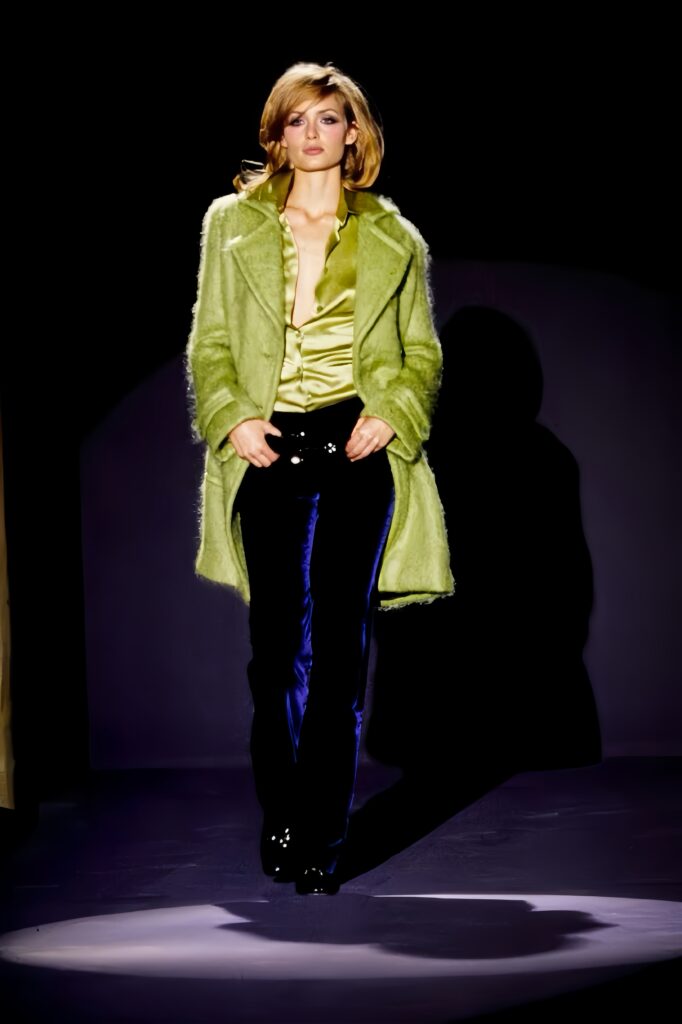
The Tom Ford Woman (Radical Glamour): She is the modern heiress of the Studio 54 style. Her aesthetic is a blend of aggressive sensuality and impeccable elegance. Shimmering fabrics, velvet, plunging necklines, and a confidence that intimidates. She does not seek approval; she knows she is in control.


The Tom Ford Man (The Hedonistic Gentleman): Ford rescued the idea of the man who takes care of himself with intention.
His suit is unmistakable: broad shoulders, large lapels, and a perfect silhouette. He is the modern James Bond: impeccable, masculine, and obsessed with details.


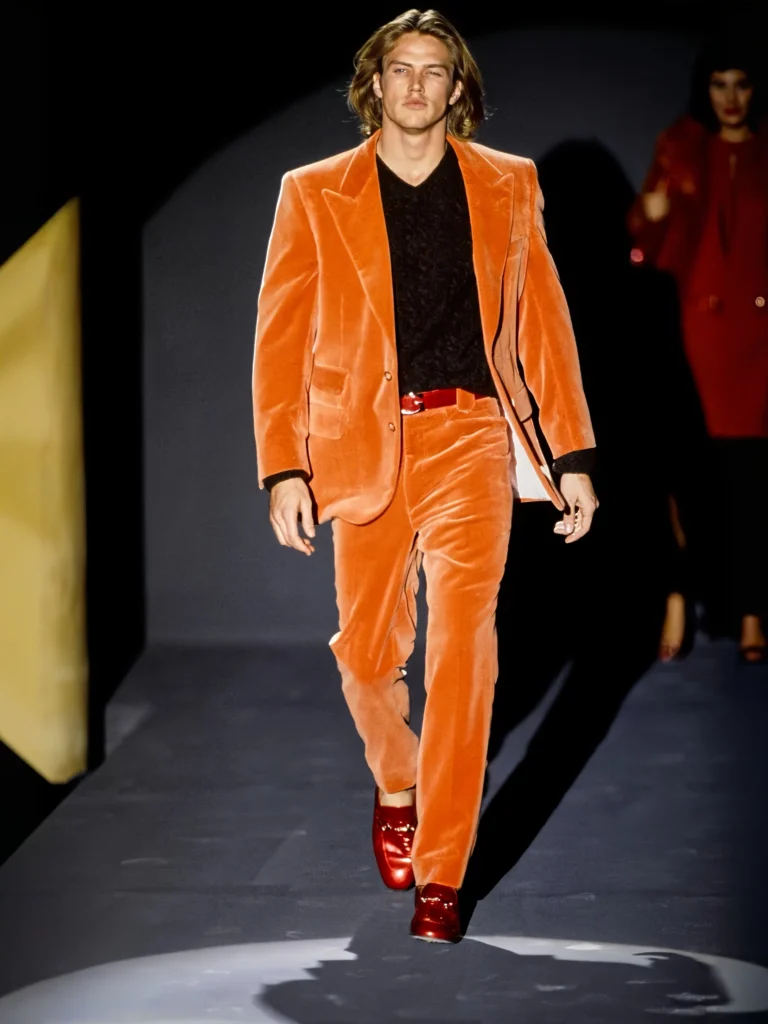
Tom Ford’s life is a tribute to order. It is rumored that he takes up to three or four baths a day to «reset» his mind, and that his work ethic is tireless. After leaving Gucci and Saint Laurent, he founded his own eponymous brand, proving that his name was enough to sustain an empire of fragrances, cosmetics, and haute couture.

The Director Who Paints with the Camera
For Ford, cinema is his purest artistic expression. As a filmmaker, he uses his architect’s eye to control every millimeter of the frame, achieving two masterpieces:

A Single Man — 2009: A dazzling debut where the use of color communicates the protagonist’s emotional state.
The Hidden Pain Behind Perfection
Synopsis: Set in the city of Los Angeles in 1962, amidst the Cuban Missile Crisis, the story follows George Falconer (masterfully played by Colin Firth), a refined British university professor struggling to find meaning in his life after the sudden death of his partner of sixteen years, Jim.
The film takes place over the course of a single day, a day on which George has decided to put an end to his suffering. As he executes his farewell plans, his encounters with a series of people—his best friend, the flamboyant and depressed Charley (Julianne Moore), an attractive young prostitute, and one of his students (Nicholas Hoult)—force him to question whether he is truly ready to leave this world. It is a beautiful work about grief, loneliness, and the search for beauty in the small details.
Nocturnal Animals — 2016: A dark and sophisticated psychological thriller that won the Grand Jury Prize in Venice.
«Revenge is a dish best served as art.»

Synopsis: This is a fascinating psychological thriller that navigates two parallel stories (one real and one fictional, within a book). The main plot follows Susan Morrow (Amy Adams), a Los Angeles art gallery owner trapped in a cold marriage and an empty life that does not fulfill her.
One day, she receives a package from her ex-husband, Edward Sheffield (Jake Gyllenhaal), a writer she hasn’t seen in years. It is the manuscript of his first novel, titled Nocturnal Animals, dedicated to her. As she reads it, Susan is immersed in a violent, heartbreaking, and tense story about a man whose family is kidnapped on a Texas highway. As Susan progresses through the reading, she realizes that the novel is a dark metaphor for the end of her own relationship with Edward and a sophisticated form of psychological revenge.
A Curious Fact: Both films are adaptations of novels and stand out for photography, costumes, and art direction so perfect that every frame looks like a painting.

The Vision of an Aesthete
Tom Ford is proof that talent has no borders. He went from being a star designer to a respected film director, demonstrating that his «eye» for beauty is universal. Today, when analyzing his life, we understand that for him, aesthetics are not vanity: they are a form of respect for oneself and for art.
What do you think of Tom Ford’s evolution? Do you prefer his facet as a designer or as a film director? Leave us your comment and don’t forget to subscribe for more content on cinema, fashion, and lifestyle.












Deja una respuesta